
The UV curing technology is well-known with its fast curing rates and extremely low VOC emissions, now being widely used in the coatings, inks, and adhesive industry. The core of this technology, the UV-curable monomers, are what dictate the viscosity, reactivity, and eventual performance properties of a formulation.
In this guide, we will explain what UV cure monomers are and how to choose the right products from our product portfolio, developed by a trusted UV materials manufacturer. e.g. N-Vinylcaprolactam (CAS 2235-00-9), Isodecyl Acrylate(CAS 1330-61-6), and 2PO-NPGDA(CAS 84170-74-1).
What are UV-Curable Monomers?
UV-curable monomers are a type of low-viscosity reactive diluents that can also undergo photopolymerization reactions. They have reactive double bonds thus can easily form polymers in the presence of ultraviolet light.
In practical formulations, UV-curable monomers serve as more than just diluents—they are critical components that determine the product’s performance characteristics.
They are mostly utilized to:
- Minimise the viscosity of coatings and inks.
- Customize flexibility and hardness.
- Increase surface wettability and adhesion.
- Accelerate curing speed.

Types of UV-Curable Monomers and Key Products
1. Low-Viscosity UV Monomers (Improving Flowability and Flexibility)
In inkjet inks and inksjet coatings, low-viscosity UV monomers are also very important and high flowability is a highly important factor.
Recommended product: Isodecyl Acrylate (CAS 1330-61-6)
- A low-viscosity UV monomer that minimizes the viscosity of the systems.
- Provides great flexibility and weather resistance to system.
- A perfect plastic coatings and flexible film material.
2. UV Crosslinking Monomers (Improving Hardness and Strength)
Key Product:Neopentyl Glycol Diacrylate ( CAS 2223-82-7)
- One of the most commonly used UV crosslinking monomers.A widely used UV crosslinking monomer.
- Enhances a balance between chemical resistance and hardness.
Related Product: 2PO-NPGDA (CAS 84170-74-1)
- Has better flexibility and reduces shrinkage.
3. Rapidly Curing UV Monomers (Increasing Reactivity)
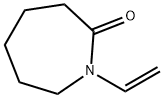
The Name of the Key Product: N-Vinylcaprolactam (CAS 2235-00-9).
- An extremely highly reactive fast-curing UV monomer.
- Successfully counteracts the effects of oxygen inhibition.
- Importantly increases the curing performance.
Recommended Combinations:
- N-Vinylcaprolactam (CAS 2235-00-9) + Isodecyl Acrylate
- N-Vinylcaprolactam (CAS 2235-00-9) + NPGDA
4. Adhesion-Promoting UV Monomers
Key Product: 4EO-NPA (CAS 50974-47-5)
- An adhesive UV monomer.
- Enhances wettability and strength of substrate bonding.
5. High-Performance UV-Curable Monomers
Recommended Products: BPA2EO Diacrylate (CAS 64401-02-1)
- A hard UV-curable monomer.
- Has outstanding chemical resistance.
How UV Cure Monomers Work in Formulations?
Common UV-curable compounds are:
- Oligomers
- Monomers
- Photoinitiators
Example formulation:
- N-Vinylcaprolactam (CAS 2235-00-9) → rapid drying.
- Isodecyl Acrylate→low viscosity.
- NPGDA → hardness
- 4EO-NPA (CAS 50974-47-5) → adhesion
The combination produces a balanced UV system.
Applications of UV Cure Monomers
- UV Coatings
Suggested Mixtures: Isodecyl Acrylate + NPGDA + 4EO-NPA.
- UV Inks
Suggestions and combinations Recommended Combinations: Isodecyl Acrylate + N-Vinylcaprolactam (CAS 2235-00-9).
- UV Adhesives
Suggested Combinations: NPGDA + BPA2EO Diacrylate.
- 3D Printing
Suggested Combinations:N-Vinylcaprolactam (CAS 2235-00-9) + NPGDA
How to Choose the Right UV Cure Monomer?
- Low viscosity → Isodecyl Acrylate
- Quickly curing → N-Vinylcaprolactam (CAS 2235-00-9)
- Strength → NPGDA / BPA20EODA (CAS 64401-02-1)
- Adhesion → 4EO-NPA (CAS 50974-47-5)
FAQ: UV Cure Monomers
Q 1: What is the use of UV cure monomers?
Coatings, inks, adhesives, and 3D printing UV-curable monomers find extensive application in the industry; they are primarily used to decrease the viscosity of systems and be involved in polymerization processes. Particularly, such products like N-Vinylcaprolactam (CAS 2235-00-9) and Isodecyl Acrylate(CAS 1330-61-6) are commonly used to increase the speed of curing and flexibility.
Q2:What is the difference between UV monomers and oligomers?
The UV monomers are used as the low-molecular-weight reactive diluents, and the oligomers form the major structural backbone of the coating. Monomers such as 2PO-NPGDA(CAS 84170-74-1) and 4EO-NPA (CAS 50974-47-5) help to modulate properties such as hardness and adhesion.
Q3: What is the best UV monomer to use in quick curing?
N-Vinylcaprolactam (CAS 2235-00-9) is widely known as one of the best UV-curable monomers to be cured rapidly due to its high reactivity and its power to prevent the oxygen-induced polymerization.
Q4:What UV monomer causes a decrease in viscosity?
Isodecyl acrylate (CAS 1330-61-6) is a popular low viscosity UV-curing monomer that provides better flow and leveling characteristics to coating and inks.