

Photoinitiators are a specialized group of materials that are important in photopolymerization and UV/LED curing technologies. Photoinitiators absorb photons when exposed to light of certain wavelengths to yield reactive species, such as free radicals, that then trigger the formation of polymer networks of liquid resins and monomers. In turn, the process underlies a broad spectrum of industrial applications, notably in a variety of fields such as coatings and adhesives, 3D printing and gel nail polishes.
What is the Importance of Photoinitiators?
Conventional thermal curing involves using heat to trigger polymerization. Photoinitiators are cured immediately after exposure to light and at specific times, without the necessity of high temperatures or solvents. This leads to a more efficient, quicker, energy efficient process with minimal volatile organic compounds (VOCs).
- Takes up light energy of certain wavelengths (UV or visible light).
- Produces free radicals which induce polymerization.
- Quickly cross-linking of monomers which transform liquid resins into solid film or components.
How Photoinitiators Work?
Light (incident at a photoinitiator molecule):
1.The molecule absorbs the photon.
2.Bonds can break and electrons excited.
3.Generation of very reactive free radicals.
4.These free radicals trigger polymer chains by reacting with the monomers and the polymerization process is complete in minutes.
Types of photoinitiators
Type I (Cleavage Initiators)
- The exposure to light directly causes the generation of free radicals.
- Coatings, adhesives and inks Ideal to use in UV/LED curing.
- Examples from portfolio:
- Photoinitiator TPO(CAS 75980-60-8) – high efficiency, low yellowing.
- Photoinitiator TPO-L(CAS 84434-11-7) – liquid form, deeper cure, low yellowing.
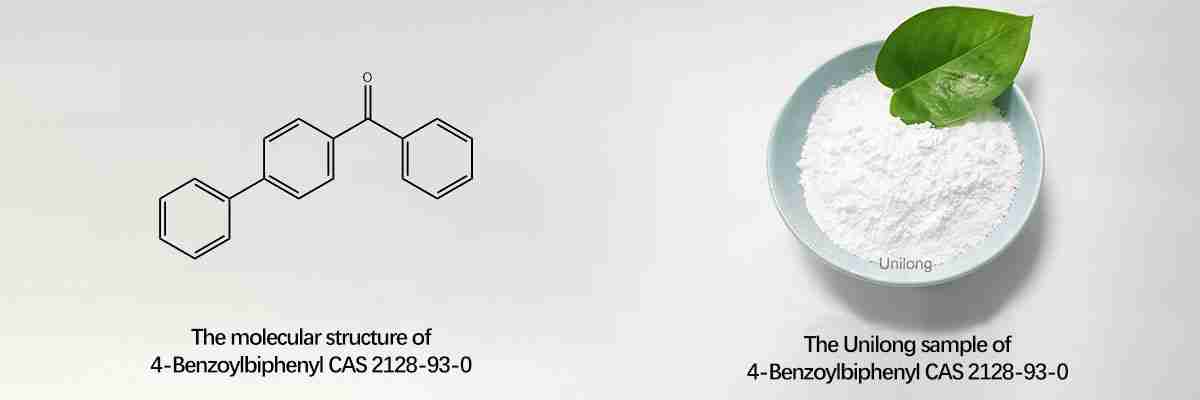
- 4-Benzoylbiphenyl(CAS 2128-93-0) – effective for thin-to-medium coatings and LED/UV curing systems.
Type II (Hydrogen Abstraction / Electron Transfer)
- To develop free radicals a coinitiator is needed.
- Often used in specialty coatings.
Applications of Photoinitiators
Photoinitiators are widely used in:
- Wood, metal, automotive and consumer products UV-curable coatings.
- Flexographic inks and UV printing inks.
- Adhesives and sealants
- 3D printing resin
- Gel nail polish (Most high performance gels contain [TPO], [TPO-L] to cure with LED; [4-benzoylbiphenyl] is the best in inks and adhesives, and is employed in thin to medium layers)

Choose the right photoinitiator
Factors to consider:
- Light source: LED and UV.
- Thickness and Pigmentation of Coating.
- Speed and efficiency of curing.
- Resistance to yellowing.
- Resin Compatibility.
Select example:
- Photoinitiator TPO(CAS 75980-60-8) -Quick cure, low brown, good on thin to medium covers.
- Photoinitiator TPO-L(CAS 84434-11-7)– Deep cure of thick or lighter colored finishes.
- 4-Benzoylbiphenyl(CAS 2128-93-0) – Formulators can use this on thin to medium coats and LED/UV cured systems. Frequently asked questions Photoinitiators and Product Guide.
FAQ — Photoinitiators & Product Guide
Q1: What are photoinitiators?
Photoinitiators are substances that take in the light and produce free radicals in order to trigger polymerization. They are used for UV/LED curing of coatings, adhesives, inks, 3D printing and gel nail polish.
Q2: What does a photoinitiator do?
By exposing photoinitiators to light, one can trigger polymerization immediately, providing the opportunity to cure instantly, control precisely, and achieve better performance of UV/LED systems.
Q3: What is the best photoinitiator to use in LED curing?
They are Photoinitiator TPO, Photoinitiator TPO-L and 4-Benzoylbiphenyl, which optimize with LED systems and perform efficiently at deep cure and low yellowing through UV/Near UV absorption.Manufacturers widely use these photoinitiators in high-performance coatings and inks.
Q4: What photoinitiator is in gel nail polish?
A variety of high performance gels cure fast with Photoinitiator TPO or Photoinitiator TPO-L. This applies in coatings and ink application, and one can apply this in thin to medium layers 4-Benzoylbiphenyl.
Q5: Are these photoinitiators able to cure thick or pigmented coatings?
These are TPO-L and 4-Benzoylbiphenyl, which demonstrate good uniformity of cure with no partial polymerization of the material at medium layers.
Q6: What is the way to select a photoinitiator to my use?
Light source (UV vs. LED), coating thickness, amount of pigment, cure speed and yellowing tolerance. Based on the system, Photoinitiator TPO, Photoinitiator TPO-L or 4-Benzoylbiphenyl are the best, with the benefits of fast cure, low yellowing and deep penetration.