

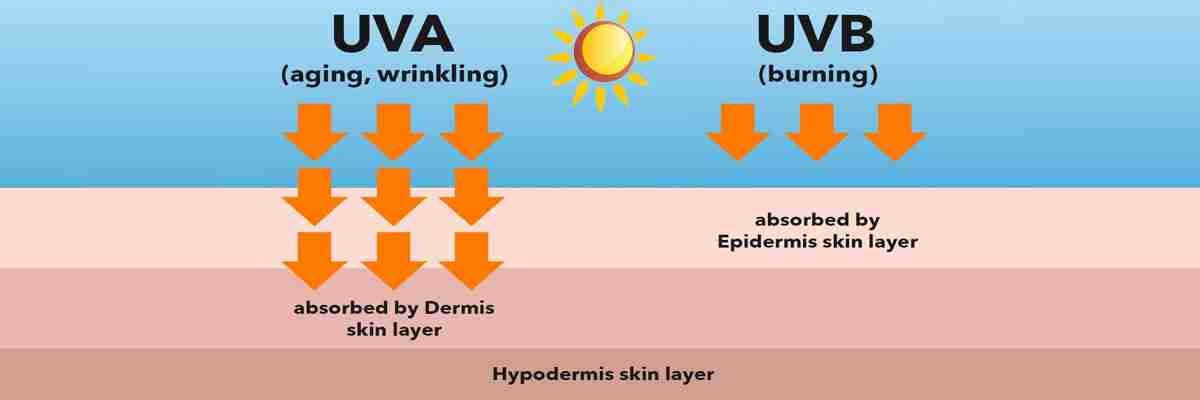
In today’s society, as people’s attention to skin health and beauty keeps increasing, sunscreen products have become an important part of daily skin care. Avobenzene, as an efficient ultraviolet absorber, plays a crucial role in the field of sun protection. The sun protection we usually talk about mainly protects against UVA and UVB. UVA has strong penetrating power and can reach the dermis of the skin. Long-term effect will damage the elastic fibers and collagen fibers of the skin, accelerating skin aging, sagging, and causing problems such as wrinkles and tanning.
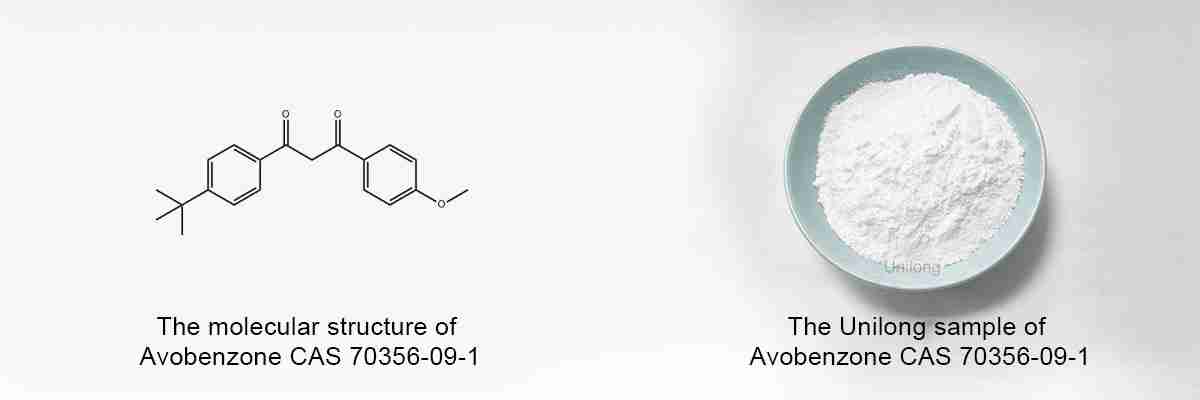
Avobenzene CAS 70356-09-1, also known as 4-tert-butyl-4′-methoxy-dibenzoylmethane, chemically, its molecular formula is C20H22O3, with a molecular weight of 310.3869, is a derivative of benzoylmethane (DBM). In terms of appearance, it presents as a crystalline powder ranging from white to light yellow. This compound has liposoluble properties, which enable it to blend well into various oily systems and thus play a key role in the formulation design of sunscreen products.
The sun protection principle of avobenzone
The reason why avobenzone can occupy an important position in the sun protection field lies mainly in its unique sun protection principle. It belongs to chemical sunscreens. When ultraviolet rays shine on the application area of sunscreen products containing Avobenzene CAS 70356-09-1, the Avobenzene molecules accurately capture the ultraviolet rays and absorb their energy.
Specifically, in the UVA band of ultraviolet light (315-400 nanometers), avobenzone can precisely interact with photons in this band. After absorbing the photon energy, the electrons inside the molecule will transition from the ground state to the excited state. During this process, the energy of ultraviolet rays is absorbed by avobenzone and converted into the internal energy of the molecule. Subsequently, the electrons in the excited state will return to the ground state. During this fallback process, energy is released in the form of heat, thereby avoiding direct damage to the skin from ultraviolet rays.
Among different types of sunscreen products, avobenzone has its own characteristics in performance. In sunscreen, it can fully blend with other oily ingredients to form a stable sun protection system. Because the texture of sunscreen is relatively thick, Avobenzene CAS 70356-09-1 can be more evenly dispersed in it and continuously exert its sun protection effect. It is suitable to be applied before long-term outdoor activities to provide long-lasting protection. In sunscreen spray, avobenzone exists in a finer particle state and can form a film quickly, making it convenient to reapply at any time. However, due to the light and thin texture of the spray, the evaporation rate of avobenzone is relatively fast. Therefore, the frequency of reapplication may need to be higher than that of sunscreen. It is suitable for providing additional sun protection to the skin at any time during travel, such as shopping or sightseeing.
The application of avobenzone
1.In the cosmetics industry, avobenzone is a core ingredient in sunscreen products, blocking ultraviolet rays (UVA) and providing protection for the skin. In addition to common sunscreens and sun lotions, avobenzone is also added to foundation, primer, BB cream and other base makeup products with sun protection functions, allowing users to achieve sun protection effects while applying makeup.
2.In the field of medicine, the application of avobenzone mainly focuses on the treatment and prevention of skin diseases. For patients with skin diseases that are sensitive to ultraviolet rays, such as photosensitive dermatitis and pleomorphic solar rash, topical preparations containing avobenzone can effectively reduce the irritation of ultraviolet rays to the affected skin and relieve inflammatory symptoms. Some hospitals will customize ointments or lotions containing avobenzone based on patients’ conditions for daily skin protection and treatment assistance.
3.In the field of outdoor plastic products, avobenzone can be added as a light stabilizer to plastic raw materials. Outdoor plastics are prone to aging and becoming brittle when exposed to ultraviolet rays for a long time. Avobenzene CAS 70356-09-1 can absorb ultraviolet energy, prevent the breakage and degradation of plastic molecular chains, and extend the service life of plastic products. It can be used in sunshades, outdoor furniture, automotive parts and other products.
4.In the field of textiles, applying Avobenzene to the fabric surface through a special process can endow textiles with sun protection functions, and produce outdoor clothing, curtains and other products with sun protection effects.

Although avobenzone is widely used in the field of sun protection, its safety has always been the focus of people’s attention and controversy.
From the perspective of skin allergies, some people may experience skin allergic reactions after using sunscreen products containing Avobenzene. Some users have reported that after using a certain sunscreen containing avobenzine, their facial skin experienced redness and itching. The symptoms gradually eased after they stopped using it. This is because avobenzine, as a chemical substance, although it is non-toxic in itself and has relatively low skin irritation under normal circumstances, when it is used in combination with other ingredients such as light stabilizers, it may cause skin irritation and pose a low risk of toxicity. If the user has sensitive skin and the skin barrier is relatively fragile, the probability of this risk occurring may be higher.
To reduce the potential risks of avobenzone, people with sensitive skin are advised to conduct a local skin test behind the ear or on the inner side of the wrist before use. Observe for 24 to 48 hours. If there are no symptoms such as redness, swelling, or itching, then use it normally. When using sunscreen products containing Avobenzene, it is necessary to master the correct method: apply it 15 to 30 minutes before going out to allow the sunscreen ingredients to form an effective protective film on the skin surface. When applying, evenly cover exposed areas such as the face, neck and arms, and do not miss details such as the ears and the back of the neck. Generally speaking, the amount used for the face is about the size of a coin, and for other parts of the body, the amount can be appropriately increased according to the area. If you have been outdoors for a long time, sweated a lot or gone swimming, you should reapply it in time to ensure the continuity of the sun protection effect. After use, it is necessary to do a good job of cleaning at night. Use a mild makeup remover to thoroughly remove the sunscreen, and then wash the face with a facial cleanser to avoid the residue of Avobenzene from burdening the skin. In chlorine-containing environments such as swimming pools, try to minimize the use of sunscreen products containing avobenzone, or rinse your body as soon as possible after swimming to reduce the exposure time to chemicals.